 By Walker Evans
Attention-Deficit/Hyperactivity Disorder, commonly known as ADHD, is one of the most common neurodevelopmental disorders in children. While many children naturally become energetic, distracted, or impulsive at times, ADHD goes beyond occasional behavior. It affects how a child functions at school, at home, and socially.
Children with ADHD often struggle to maintain focus, follow instructions, regulate emotions, or stay still for long periods. These behaviors may appear harmless at first, but over time they can affect learning ability, confidence, friendships, and emotional well-being.
Many parents first notice symptoms when a child begins school. Teachers may observe that the child frequently interrupts, forgets tasks, struggles to complete assignments, or appears mentally absent during lessons. In some cases, symptoms are mistaken for stubbornness or poor discipline, which delays proper support and treatment.
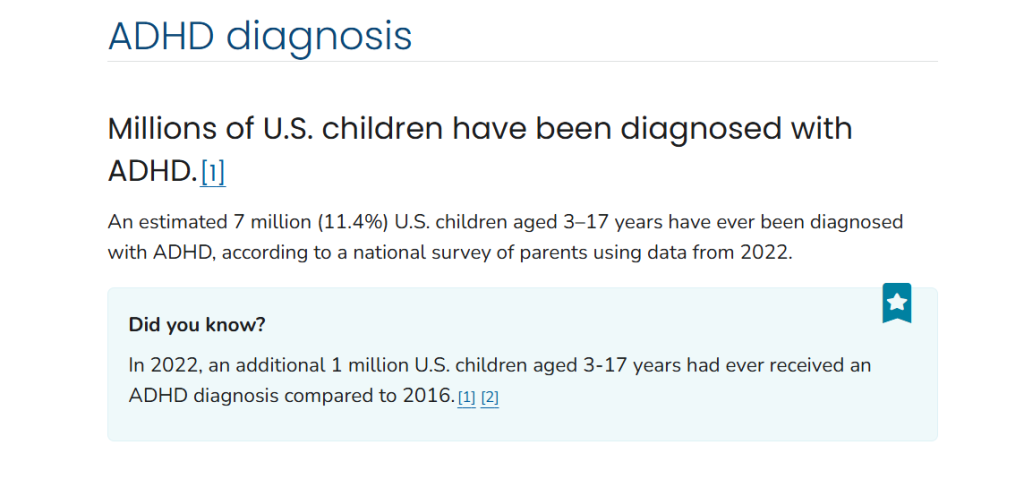
Centers for Disease Control and Prevention (CDC) reports that an estimated 7 million U.S. children ages 3–17 have ever been diagnosed with ADHD.
Quick Answer
- ADHD is a neurodevelopmental disorder that affects attention, impulse control, and activity levels
- Symptoms often begin before the age of 12 and may continue into adulthood
- There are three main ADHD types: inattentive, hyperactive-impulsive, and combined type
- ADHD is not caused by bad parenting, laziness, or too much sugar
- Early diagnosis and proper treatment can significantly improve academic and social development
- Treatment may include behavioral therapy, school support, lifestyle changes, and medication
- Boys are diagnosed more frequently, but girls are often underdiagnosed due to different symptom patterns
Medical note: This article is for educational purposes only and should not replace guidance from a pediatrician, developmental specialist, or genetic counselor.
Signs and Symptoms of ADHD in Children
ADHD symptoms usually fall into two major categories: inattentiveness and hyperactivity-impulsivity. Some children mainly struggle with focus, while others show excessive physical activity and impulsive behavior.
Children with inattentive symptoms may regularly lose school supplies, become easily distracted during conversations, forget homework, or have difficulty following multi-step instructions. They often appear “daydreamy” rather than disruptive, which is why this presentation can remain unnoticed for years.
Hyperactive and impulsive symptoms are usually more visible. A child may constantly fidget, run excessively, interrupt others, speak excessively, or struggle to wait their turn. These children may act before thinking, which can create social or academic difficulties.
According to the National Institute of Mental Health, ADHD is marked by an ongoing pattern of inattention, hyperactivity, and impulsivity. Symptoms must also be persistent and interfere with daily functioning for a diagnosis to be considered.
| Symptom Area | Common Behaviors |
| Inattention | Forgetfulness, losing items, poor concentration |
| Hyperactivity | Constant movement, excessive talking, restlessness |
| Impulsivity | Interrupting others, acting without thinking |
| Emotional Regulation | Frustration, mood swings, impatience |
| Academic Challenges | Difficulty completing homework or following lessons |
The Three Main Types of ADHD
ADHD is not the same for every child. Medical professionals categorize it into three main types depending on the dominant symptoms.
Predominantly Inattentive Type
Children with this type mainly struggle with concentration and organization. They may seem quiet and withdrawn rather than hyperactive. Because they are not disruptive, many children, especially girls, remain undiagnosed for years.
Predominantly Hyperactive-Impulsive Type
This form is characterized by constant movement, impulsive decisions, and difficulty remaining calm. Children may interrupt conversations frequently or struggle to stay seated in classrooms.
Combined Type ADHD
This presentation includes symptoms from both inattentive and hyperactive-impulsive categories. Children with combined ADHD often face challenges in academic, emotional, and social environments.
The National Institute of Mental Health (NIMH) explains that ADHD symptoms and severity can change as children grow older.
Why ADHD Happens
Researchers still do not know the exact cause of ADHD, but studies suggest a strong connection to genetics, brain development, and neurological function. Children with a family history of ADHD may be more likely to develop the condition themselves.
Research suggests that ADHD is linked to differences in brain development and functions related to attention, decision-making, and impulse control. Environmental factors such as premature birth, exposure to tobacco smoke during pregnancy, or early childhood stress may also contribute.
Contrary to popular myths, sugar intake alone does not cause ADHD. Similarly, ADHD is not the result of poor parenting or lack of discipline. These misconceptions often create guilt and confusion for families seeking answers.
How ADHD Is Diagnosed
There is no single blood test or brain scan that confirms ADHD. Diagnosis usually involves a comprehensive evaluation that includes behavioral observations, interviews, school reports, and standardized assessments.
Doctors often gather information from both parents and teachers because symptoms must appear in more than one environment. The evaluation process may also rule out other conditions, such as anxiety, autism spectrum disorder, hearing issues, sleep disorders, or learning disabilities.
Early diagnosis is important because untreated ADHD can affect confidence, academic development, and emotional health. Children who repeatedly experience criticism without understanding the causes of their struggles may develop low self-esteem.
| Area of Life | Possible ADHD Impact |
| School Performance | Incomplete assignments, low concentration |
| Social Relationships | Interrupting friends, emotional outbursts |
| Home Environment | Difficulty following routines |
| Emotional Health | Anxiety, frustration, low confidence |
| Sleep Patterns | Difficulty settling or maintaining routine |
If a child’s attention, impulsivity, emotional regulation, or behavior is affecting school, home life, or friendships, a professional evaluation can help parents understand what kind of support may be most helpful.

Treatment Options for ADHD in Children
ADHD treatment usually works best when multiple approaches are combined. The right strategy depends on the child’s age, symptom severity, and daily challenges.
Behavioral therapy is often recommended first, especially for younger children. This therapy helps children build structure, emotional control, and healthy coping mechanisms. Parents may also receive training on communication techniques and positive reinforcement methods.
School support is another critical component. Children with ADHD often perform better when instructions are simplified, routines are structured, and distractions are minimized.
Medication is sometimes prescribed when symptoms significantly interfere with daily life. Stimulant medications are commonly used and have been extensively researched. These medications may help improve attention and impulse control by affecting neurotransmitter activity in the brain.
For school-age children and adolescents, the CDC summarizes American Academy of Pediatrics guidance as recommending medication treatment combined with behavior therapy when appropriate.
| Treatment Option | Main Purpose |
| Behavioral Therapy | Improve emotional and behavioral control |
| Parent Training | Build supportive communication strategies |
| Medication | Improve attention and impulse management |
| School Accommodations | Reduce academic stress |
| Lifestyle Support | Improve sleep, routine, and physical activity |
How ADHD Affects Emotional Development
Many people focus only on concentration problems, but ADHD also affects emotional regulation. Children may become frustrated more easily, react intensely to criticism, or struggle to manage disappointment.
Repeated negative experiences at school or social rejection can increase the risk of anxiety, sadness, or low self-esteem. This is why emotional support is just as important as academic support.
Children with ADHD often thrive when adults understand that their behaviors are not intentional acts of defiance. Encouragement, patience, and consistent structure can dramatically improve emotional stability and self-confidence.
FAQs
Symptoms often begin before the age of 12, although some signs may appear during preschool years. Many parents notice symptoms more clearly once a child starts school and daily routines become more structured.
Some children experience reduced symptoms as they grow older, but many continue to experience ADHD into adolescence and adulthood. Symptoms may also change over time, with hyperactivity becoming less obvious while organization and focus challenges remain.
Boys are diagnosed more frequently, although girls are often underdiagnosed because their symptoms may appear less disruptive. Girls may be more likely to seem distracted, overwhelmed, forgetful, or quiet rather than visibly hyperactive.
No diet can cure ADHD, but balanced nutrition may help support concentration, energy levels, sleep, and overall well-being. Parents should speak with a healthcare provider before making major dietary changes for ADHD-related concerns.
ADHD medications are widely researched and are commonly used when prescribed and monitored by qualified healthcare professionals. Parents should discuss potential benefits, side effects, and alternatives with their child’s doctor.
Conclusion
ADHD in children is far more complex than simply being energetic or distracted. It is a neurodevelopmental condition that affects attention, impulse control, emotional regulation, and daily functioning. Early recognition can make a meaningful difference in a child’s long-term academic performance, mental health, and social development.
Many children with ADHD are highly creative, intelligent, and energetic individuals who simply process the world differently. With proper guidance, structured support, and evidence-based treatment, they can succeed academically, socially, and emotionally.
Understanding ADHD with compassion rather than judgment is often the first step toward helping a child build confidence and thrive.