
 By Walker Evans

Many parents notice behaviors in their child that seem different from those of their peers and begin searching for answers. During this process, ADHD and autism frequently appear as possible explanations because both conditions can affect behavior, communication, learning, and social interactions.
The confusion often comes from overlapping symptoms. A child with ADHD may struggle to focus during conversations, while a child with autism may appear inattentive because they process social information differently. Both children may have difficulty following instructions, managing emotions, or fitting into group settings.
Although these similarities exist, ADHD and autism are distinct conditions with different underlying characteristics. Understanding those differences can help parents recognize patterns and pursue appropriate professional guidance.
Quick Answer
ADHD and autism are separate neurodevelopmental conditions, but they can share overlapping symptoms. ADHD primarily affects attention, impulsivity, and activity levels, while autism is more closely connected to social communication differences, sensory processing, repetitive behaviors, and restricted interests.
Some children may have ADHD, autism, or both. Because the symptoms can look similar from the outside, a professional evaluation is the best way to understand what is driving a child’s behavior and what kind of support may help.
What Is ADHD?
Attention-Deficit/Hyperactivity Disorder, or ADHD, is a neurodevelopmental condition that affects a person’s ability to regulate attention, impulses, and activity levels. It often begins in childhood and can continue into adolescence and adulthood.
Children with ADHD may struggle to stay focused on tasks, become easily distracted, interrupt conversations, or act without thinking. Some children appear constantly active and energetic, while others may primarily experience difficulties with attention.
ADHD is commonly described in inattentive, hyperactive-impulsive, and combined presentations. Each child may show symptoms differently depending on age, environment, and individual personality.
The National Institute of Mental Health explains that ADHD involves ongoing patterns of inattention, hyperactivity, and impulsivity, which can affect focus, organization, self-control, and daily functioning.
What Is Autism Spectrum Disorder?
Autism Spectrum Disorder, or ASD, is a neurodevelopmental condition that affects how individuals communicate, interact socially, process information, and experience the world around them.
Autism is called a spectrum because it presents differently in every person. Some individuals may require significant support in daily life, while others may live independently with minimal assistance.
Children with autism often display differences in social communication and may develop intense interests in specific topics. They may also engage in repetitive behaviors or experience heightened sensitivity to sounds, lights, textures, or other sensory inputs.
According to the National Institute of Mental Health, autism commonly involves difficulty with social communication and interaction, restricted interests, repetitive behaviors, and symptoms that affect daily functioning.
The Biggest Difference Between ADHD and Autism
The most significant difference lies in the core challenges associated with each condition.
ADHD primarily affects attention regulation, impulse control, and activity levels. Children often know social rules but struggle to consistently follow them because of distractibility or impulsive behavior.
Autism primarily affects social communication, social understanding, sensory processing, and behavioral patterns. Children may experience difficulty interpreting social cues, understanding unspoken rules, or navigating social relationships naturally.
A child with ADHD might interrupt a conversation because they are impulsive and excited. A child with autism might interrupt because they do not recognize the expected flow of conversation or are focused on a specific interest.
While the behaviors may look similar from the outside, the reasons behind them are often very different.
Social Interaction Differences
Social interactions often provide important clues when distinguishing ADHD from autism. Looking at a child’s motivation, comfort level, and communication style can help parents better understand what may be happening beneath the behavior.
Children with ADHD generally want social interaction and friendships. They may enjoy group activities and conversations but struggle to manage impulses, wait their turn, or stay focused during interactions.
Children with autism may also desire friendships, but they often experience greater challenges understanding social expectations. They may struggle with eye contact, interpreting facial expressions, understanding sarcasm, or recognizing subtle social cues.
Some autistic children prefer predictable social situations and may become overwhelmed by large groups or unfamiliar environments. Their communication style may appear different from what others expect, leading to misunderstandings despite genuine efforts to connect.
Communication and Language Patterns
Communication differences are often more noticeable in autism than ADHD. However, both conditions can affect how a child participates in conversations, responds to others, and manages social expectations.
Children with ADHD may talk excessively, switch topics quickly, or interrupt others. However, their understanding of language and social communication is generally intact.
Children with autism may experience differences in both verbal and nonverbal communication. Some may speak later than expected, while others develop advanced vocabularies but struggle with conversational reciprocity.
Certain autistic children may interpret language very literally. Figurative expressions, jokes, sarcasm, and implied meanings can sometimes be confusing.
These communication differences are among the reasons autism assessments typically involve evaluating social communication skills alongside behavioral observations.

Sensory Processing and Daily Experiences
Sensory processing differences are much more commonly associated with autism than ADHD. These sensory experiences can affect how a child responds to everyday environments, routines, clothing, food, noise, or physical touch.
Many autistic children experience heightened sensitivity to sounds, textures, lights, smells, or physical sensations. Everyday experiences that seem ordinary to others may feel overwhelming or distressing.
For example, a crowded shopping center may expose a child to bright lights, loud noises, strong smells, and unexpected interactions simultaneously. This sensory overload can contribute to stress and emotional dysregulation.
While some children with ADHD may also experience sensory challenges, sensory processing differences are commonly recognized among autism-related traits and are often important during evaluation. The CDC notes that people with autism may have different ways of learning, moving, or paying attention, along with social communication differences and restricted or repetitive behaviors.
Repetitive Behaviors and Special Interests
Repetitive behaviors represent another important distinction. While every child has preferences and favorite activities, autism-related repetitive behaviors or special interests may be more intense, structured, or important for emotional regulation.
Children with autism often engage in repetitive movements, routines, or behaviors that provide comfort, predictability, or sensory regulation. Examples may include hand flapping, rocking, arranging objects, or following highly structured routines.
Many autistic individuals also develop focused interests in specific topics. These interests can become a source of enjoyment, learning, and expertise.
Children with ADHD may develop strong interests as well, but these interests often change more frequently and are less likely to involve repetitive patterns or rigid routines.
ADHD vs. Autism Comparison Chart
A side-by-side comparison can help parents understand how similar behaviors may come from different underlying challenges. This chart is not a diagnostic tool, but it can make the main differences easier to recognize.
| Area | ADHD | Autism |
| Primary Challenge | Attention and impulse control | Social communication and sensory processing |
| Social Interest | Usually seeks friendships | Varies by individual |
| Communication | Interrupts or talks excessively | May struggle with social communication |
| Sensory Sensitivities | Sometimes present | Frequently present |
| Repetitive Behaviors | Less common | Common |
| Focus Patterns | Easily distracted | May intensely focus on specific interests |
| Routine Changes | Often adaptable | May find changes stressful |
Can a Child Have Both ADHD and Autism?
Yes. A child can be diagnosed with both ADHD and autism. When both conditions occur together, symptoms may overlap and interact in ways that make daily life more complex.
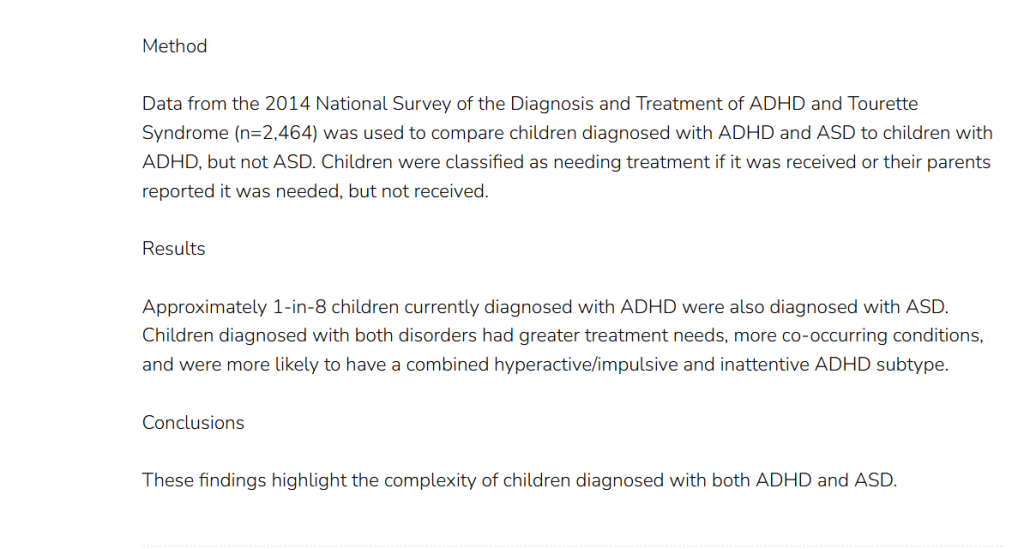
For many years, clinicians were hesitant to diagnose both conditions together. Modern research has shown that co-occurrence is relatively common. A CDC-hosted study found that approximately 1 in 8 children currently diagnosed with ADHD were also diagnosed with ASD.
When both conditions occur together, a child might struggle with attention regulation while also experiencing sensory sensitivities and social communication challenges. For example, a child may become distracted in class because of ADHD, but also become overwhelmed by classroom noise or unexpected changes because of autism-related sensory differences.
Because of this complexity, comprehensive evaluations conducted by qualified healthcare professionals are extremely important.
Comparison Chart: Common Behavioral Signs
Many behaviors can appear in both ADHD and autism, but some are more strongly associated with one condition than the other. Parents should look at patterns over time rather than relying on one behavior alone.
| Behavior | ADHD | Autism |
| Difficulty sitting still | Common | Sometimes |
| Impulsive actions | Common | Less common |
| Trouble reading social cues | Sometimes | Common |
| Strong sensory reactions | Occasionally | Frequently |
| Repetitive routines | Rare | Common |
| Intense special interests | Sometimes | Frequently |
How ADHD and Autism Are Diagnosed
Diagnosis involves a comprehensive evaluation rather than a single test. Because ADHD and autism can overlap, professionals look closely at the reason behind behaviors, not just the behaviors themselves.
Healthcare professionals collect information from parents, teachers, caregivers, developmental histories, and behavioral observations. Standardized assessments may also be used to evaluate symptoms across different settings.
Because symptoms can overlap, accurate diagnosis often requires examining the underlying reasons behind behaviors rather than focusing only on visible actions. A child who avoids group play, for example, may be distracted, socially anxious, overwhelmed by sensory input, unsure how to join, or experiencing a combination of factors.
If your child’s behavior, communication, learning, or emotional regulation is affecting daily life, speaking with a pediatrician, psychologist, developmental specialist, or other qualified healthcare provider can help you understand the next best step.
FAQs
No. ADHD and autism are separate neurodevelopmental conditions, although some symptoms can overlap. ADHD primarily affects attention, impulsivity, and activity levels, while autism is more closely connected to social communication differences, sensory processing, restricted interests, and repetitive behaviors.
Yes. It is possible for a child to meet diagnostic criteria for both conditions at the same time. When this happens, symptoms may overlap, which is why a comprehensive professional evaluation is important.
This varies. Some children receive an ADHD diagnosis first, while others are identified as autistic during early developmental screenings. The order often depends on which symptoms are most noticeable, the child’s age, and when parents or teachers raise concerns.
Not all autistic children have the same sensory experiences, but sensory differences are common. Some children may be highly sensitive to sound, light, clothing, food textures, or temperature, while others may seek certain sensory experiences.
Yes. ADHD can affect social interactions because impulsivity, distractibility, and emotional regulation challenges may make it harder for a child to wait their turn, listen consistently, or manage frustration during peer interactions.
Conclusion
ADHD and autism can sometimes appear similar on the surface, but they are distinct neurodevelopmental conditions with different characteristics and support needs. ADHD primarily affects attention, impulse control, and activity levels, while autism centers on social communication differences, sensory processing, restricted interests, and repetitive behaviors.
Understanding these differences can help parents recognize potential signs, seek professional guidance, and advocate for the support their child needs. Whether a child has ADHD, autism, or both, early identification and personalized support can make a meaningful difference in development, education, and overall quality of life.




