 By Walker Evans
Children build important skills through ordinary activities such as playing, eating, getting dressed, writing, learning, and interacting with the people around them. When one or more of these activities is consistently difficult, occupational therapy may help identify what is getting in the way and provide strategies that support participation.
Occupational therapy for children focuses on the activities that make up everyday life. Depending on the child, this may include fine motor skills, coordination, self-care, feeding, sensory needs, school activities, play, or greater independence during familiar routines.
Occupational therapy is not limited to children with one particular diagnosis. Autistic children, children with developmental delays, physical conditions, learning difficulties, sensory-related challenges, or other functional concerns may receive occupational therapy when those differences affect daily participation.
Key Takeaways
- Pediatric occupational therapy helps children participate in everyday activities at home, school, and during play.
- OT may support fine motor skills, coordination, self-care, sensory processing, feeding-related participation, school tasks, and independence.
- Therapy goals should be based on the individual child and the activities that are meaningful or difficult for them.
- Sensory strategies should be individualized rather than applied automatically to every child with sensory differences.
- Parents can support therapy goals through normal routines without turning the entire day into a therapy session.
What Does Occupational Therapy for Children Do?
Occupational therapy uses meaningful everyday activities to help children participate more successfully in daily life. In occupational therapy, the word “occupation” does not mean employment. For a child, occupations include things such as playing, learning, eating, getting dressed, brushing teeth, using classroom materials, and participating in family or school routines.
Nemours KidsHealth explains that occupational therapy can help children with physical, sensory, or cognitive challenges participate more independently in everyday activities. Pediatric OT may address areas such as fine motor skills, hand-eye coordination, basic self-care, school participation, and adaptive equipment when needed.
An occupational therapist does not simply look at whether a child can perform one isolated skill. They may consider what the child is trying to do, what makes the activity difficult, what abilities are already present, and whether changing the task or environment could make participation easier.
For example, if getting dressed is difficult, therapy might involve hand skills, balance, sequencing, sensory responses to clothing, or adapting how the routine is completed. The specific approach depends on why the activity is challenging for that child.
Which Skills Can Occupational Therapy Support?
Occupational therapy can address several areas because everyday activities rarely depend on just one skill.
Fine Motor Skills
Fine motor skills involve the small movements of the hands and fingers. Children use these skills to hold pencils, use scissors, pick up small objects, manipulate toys, fasten clothing, open containers, and use utensils.
An occupational therapist may work on hand strength, grasp, finger coordination, or control when these abilities are making an everyday activity difficult. The goal is usually tied to participation. For example, using classroom materials more comfortably rather than practicing hand movements without a meaningful purpose.
Coordination and Motor Planning
Many daily activities require the eyes, hands, and body to work together. A child may know what they want to do but have difficulty organizing or coordinating the movements needed to complete it.
Occupational therapy may use drawing, building, throwing and catching, crafts, puzzles, or two-handed activities to practice coordination within meaningful tasks. Therapists may also change the activity or environment when an adaptation would help the child participate more successfully.
Self-Care and Independence
Activities such as dressing, eating, washing hands, brushing teeth, managing shoes, and using the bathroom involve combinations of movement, sequencing, coordination, attention, and sensory processing.
When one of these routines is difficult, an occupational therapist may break the activity into manageable parts and determine which step creates the biggest barrier. A child might first learn to pull up a zipper after it has been started, for example, before eventually working toward managing more of the dressing routine independently.
The goal is not necessarily to make every child complete self-care tasks in exactly the same way. Greater participation, reduced frustration, or using an appropriate adaptation can also represent meaningful progress.
How Can Occupational Therapy Help With Sensory Challenges?
Children can respond differently to sound, touch, movement, textures, light, and other sensory information. Some children are highly sensitive to certain sensations, while others actively seek particular types of sensory input.
Sensory differences become especially relevant to occupational therapy when they interfere with meaningful activities. A child may struggle to wear certain clothes, tolerate grooming, remain in a busy classroom, participate in play, handle food textures, or complete a daily routine because of how sensory input affects them.
The American Occupational Therapy Association (AOTA) explains that occupational therapy practitioners can assess sensory integration and processing challenges and work with children, caregivers, educators, and other professionals to develop individualized strategies that support participation at home, school, and in the community.
Importantly, practitioners should not prescribe sensory strategies simply because a child has a diagnosis or appears to have a sensory preference. AOTA specifically emphasizes assessment when considering sensory-based interventions. The goal is to understand how a child’s sensory responses affect participation and then choose strategies based on those findings.
Parents interested in practical examples can also read So Special Too’s guide to sensory activities for children with autism. Activities can provide useful ideas for play, but sensory routines should still be adapted to the individual child’s comfort, preferences, and professional recommendations when therapy is involved.
Occupational Therapy for Autistic Children
Autistic children may have individual differences involving sensory processing, movement, fine motor skills, self-care, feeding, play, school participation, or other everyday activities. Occupational therapy may be included in a broader support plan when these areas create barriers to participation or independence.
Children’s Health describes pediatric occupational therapy as supporting self-care activities such as feeding and dressing as well as daily activities such as learning and play. Its pediatric OT services also address areas including fine motor skills, sensory processing, hand-eye coordination, and other abilities related to everyday participation.
There is no single occupational therapy plan for every autistic child. One child may benefit from support around dressing and personal care, while another may have goals related to handwriting, sensory regulation, feeding participation, or using classroom materials.
Good therapy goals should reflect the child’s actual needs and quality of life rather than focusing simply on making the child appear less autistic. Strengths, preferences, communication style, sensory needs, family routines, and the child’s own comfort should all influence the plan.
Can Occupational Therapy Help With Feeding?
Eating is a complex daily activity that may involve hand control, posture, utensil use, sensory experiences, routines, and coordination. Occupational therapy may therefore be part of feeding support when a child’s difficulties affect participation during meals.
The exact role of OT depends on the reason feeding is difficult.
| Feeding Concern | Possible OT Focus | Everyday Goal |
| Difficulty using utensils | Hand control and coordination | Use utensils with greater independence |
| Sensitivity to certain textures | Individualized sensory assessment and strategies | Participate more comfortably during meals |
| Difficulty bringing food to the mouth | Fine motor and coordination skills | Increase independence with eating |
| Difficulty participating in mealtime routines | Sequencing and routine strategies | Take part in familiar mealtime steps |
| Difficulty using cups or containers | Hand strength, grasp, and coordination | Drink or handle containers more independently |
Feeding difficulties can also involve swallowing, oral-motor function, gastrointestinal issues, nutrition, allergies, or other medical concerns. Occupational therapy is therefore not always the only (or the most appropriate) service involved.
Children with coughing, choking, significant swallowing difficulty, pain during eating, poor growth, dehydration, or concerns about adequate nutrition should be evaluated by appropriate healthcare professionals. Depending on the concern, care may involve a pediatrician, speech-language pathologist, dietitian, gastroenterologist, feeding specialist, or other professionals in addition to occupational therapy.
Can Occupational Therapy Help With School Activities?
School requires children to combine many skills at once. Writing, cutting, organizing materials, using classroom tools, moving between tasks, sitting for activities, and participating in routines may all involve motor, visual, sensory, attention, and organizational abilities.
An occupational therapist may support classroom participation when these areas are creating meaningful difficulties. If handwriting is a concern, for example, the therapist may look at pencil control, posture, hand strength, visual-motor coordination, the writing task itself, and whether an adaptation would improve participation.
School-based occupational therapy may also differ from clinic-based therapy. In a school setting, services typically focus on helping the child access and participate in education rather than addressing every difficulty that may occur outside school.
Parents can ask the child’s school or therapy team how occupational therapy goals relate to classroom participation and how to use strategies consistently across environments, when appropriate.
What Happens During a Pediatric Occupational Therapy Evaluation?
An occupational therapy evaluation helps determine which activities are difficult, why they may be difficult, and how those challenges affect the child’s everyday life.
The therapist usually begins by gathering information from parents or caregivers about development, medical history, current concerns, routines, strengths, and activities that matter to the child and family. The child may then complete different activities so the therapist can see how skills are used in practice.
Depending on the reason for referral, the evaluation may consider fine motor skills, coordination, self-care, visual-motor abilities, sensory responses, play, school tasks, or other functional areas. When appropriate, standardized assessments may also be used.
The therapist can then identify priorities and develop goals with the family. When useful, occupational therapists may also communicate with teachers, physicians, speech-language pathologists, physical therapists, or other professionals involved in the child’s care.
What Does an Occupational Therapy Session Look Like?
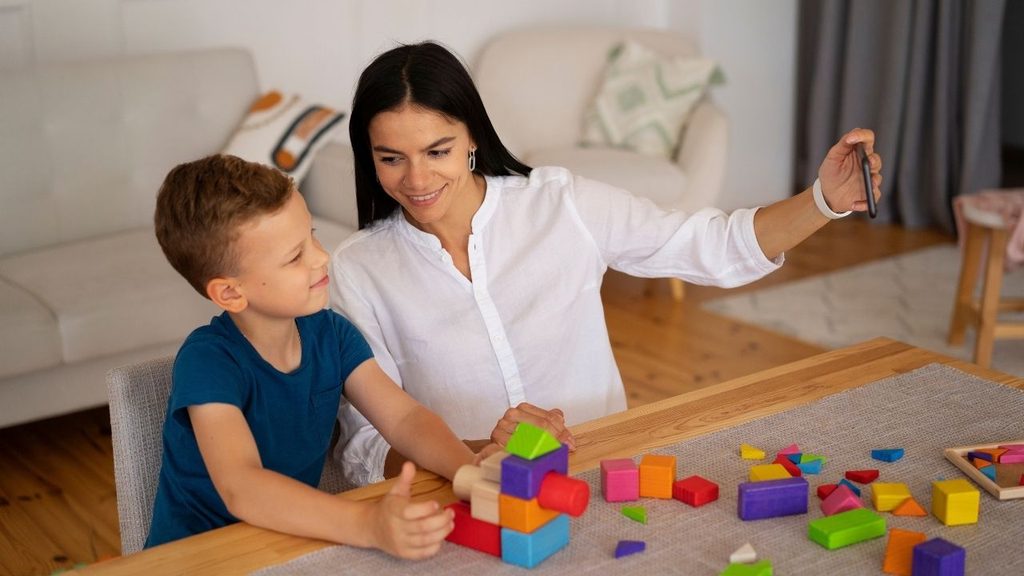
Occupational therapy sessions often look like play because therapists use meaningful activities to practice real skills. However, therapists select or adapt the activity with a specific goal in mind.
A child working on fine motor control might use blocks, craft materials, clips, puzzles, or writing tools. Someone working on dressing may practice parts of a clothing routine, while a child working on coordination may participate in activities that require both hands to work together.
For school-related goals, the therapist might use actual or simulated classroom materials. When sensory differences affect participation, the session may focus on understanding triggers, trying individualized strategies, or helping the child and family adapt a challenging routine.
The activities should connect back to everyday participation. A fun therapy task has greater value when the skill practiced can transfer into something the child needs or wants to do outside the session.
When Should Parents Consider Occupational Therapy?
Occasional difficulty with a task does not necessarily mean a child needs occupational therapy. Children develop skills at different rates, and some activities simply require more time and practice.
Parents may want to ask a healthcare professional or relevant school professional about an occupational therapy evaluation when a child:
- Consistently struggles with dressing, eating, grooming, handwriting, classroom tools, or other age-appropriate activities
- Has fine motor or coordination difficulties that interfere with play, learning, or independence
- Experiences sensory responses that regularly prevent participation in routines or environments
- Needs substantially more help with everyday activities than expected for their developmental level
- Has an existing developmental or medical condition and functional concerns that may fall within occupational therapy’s scope
The key question is often not “Does my child perform this skill perfectly?” but “Is this difficulty significantly affecting everyday participation?”
An evaluation can help clarify whether occupational therapy is appropriate and which goals would be meaningful.
How Can Parents Support Occupational Therapy Goals at Home?
Parents do not need to recreate a therapy clinic at home. Everyday routines already contain many opportunities to practice useful skills.
A child working on dressing may participate in one manageable step each morning. Fine motor practice might happen while drawing, building, opening containers, baking, or playing with favorite toys. A child working on independence can be given extra time to attempt part of a familiar routine before an adult steps in.
Consistency can help, but pressure usually does not. Practicing a skill repeatedly when a child is exhausted, overwhelmed, or frustrated may make the activity harder, not more productive.
Families looking for additional materials can explore So Special Too’s sensory products, daily living aids, learning tools, school supplies, and toys. These items may supplement play or home practice when they fit a child’s abilities and goals, but products should not replace individualized assessment when a functional difficulty requires professional evaluation.
Parents can also ask the occupational therapist to demonstrate home strategies and explain why they are being recommended. Understanding the purpose behind an activity makes it easier to adapt it naturally to family routines.
How Long Does Occupational Therapy Take?
There is no standard length of occupational therapy that applies to every child. Some children work on a specific goal for a relatively short period, while others may benefit from support over a longer time or return for reassessment as their needs change.
Duration depends on factors such as the goals being addressed, the nature of the child’s challenges, progress over time, the environment in which the skill is needed, and whether therapy continues to provide meaningful benefit.
Progress should be measured through functional change rather than simply the number of sessions completed. A child who gradually needs less assistance with dressing, participates more successfully in a classroom activity, or manages a previously difficult routine with greater comfort may be demonstrating meaningful progress.
Therapy goals should be reviewed periodically. As children develop, some goals may no longer be priorities, while new challenges may emerge.
What Should Parents Ask an Occupational Therapist?
Parents should understand why therapy is being recommended and how it connects with their child’s daily life. Useful conversations can focus on which activities are causing difficulty, what the therapist believes is contributing to the problem, and what specific changes therapy is intended to support.
Parents can also ask how progress will be measured, which strategies can realistically be used at home, how often goals will be reviewed, and whether coordination with teachers or other healthcare professionals would be useful.
If a recommendation is unclear, ask the therapist to explain or demonstrate it. Families should feel comfortable understanding the goals they are being asked to work toward.
For families who are still trying to understand available developmental supports, So Special Too’s consultation and support services may provide additional guidance, goal-setting support, workshops, and resources. These services do not replace an occupational therapy evaluation but may help families explore broader developmental and support options.
Frequently Asked Questions
Occupational therapy for children focuses on helping them participate in meaningful everyday activities such as dressing, eating, playing, writing, learning, and managing routines. Therapy may involve developing skills, adapting tasks, changing environments, or using assistive strategies depending on the child’s individual needs.
Occupational therapy may help autistic children when sensory differences, fine motor skills, self-care, feeding participation, school tasks, play, or other functional challenges affect everyday life. Goals should be individualized rather than based solely on the autism diagnosis.
Consider occupational therapy whenever a functional concern is identified and an evaluation indicates that support may be useful. Children can receive pediatric OT at different ages depending on their medical, developmental, school, and everyday needs.
Yes, occupational therapists may address handwriting when it interferes with school participation. They may consider fine motor control, hand strength, visual-motor coordination, posture, pencil grasp, the writing environment, and whether adaptations could make the task easier.
Occupational therapists can evaluate sensory processing differences when they interfere with meaningful everyday activities. Based on assessment, the therapist may recommend individualized strategies or environmental adaptations designed to improve participation rather than applying the same sensory approach to every child.
Final Thoughts
Occupational therapy for children focuses on helping children participate in the activities that make up everyday life. Depending on individual needs, therapy may support fine motor skills, coordination, self-care, sensory processing, feeding participation, school activities, play, and independence.
The goal is not to make every child perform an activity in exactly the same way. Occupational therapists can help identify barriers, build useful skills, adapt activities, and find practical strategies that make participation more accessible.
When a child consistently struggles with everyday activities, parents can share those concerns with a healthcare or education professional and ask whether an occupational therapy evaluation may be helpful. A thoughtful assessment can clarify which difficulties need support and help families choose goals meaningful to the child’s daily life.