
 By Walker Evans

Attention Deficit Hyperactivity Disorder (ADHD) is a neurodevelopmental condition that affects a child’s ability to regulate attention, impulse control, and activity levels. It is not simply a behavioral issue or a result of poor parenting, but rather a complex condition involving differences in brain development, neurobiology, and self-regulation.
Children with ADHD may show patterns of inattention, hyperactivity, or impulsivity that are more intense and persistent than typical developmental behavior. However, these symptoms alone are not enough for diagnosis. Clinicians must evaluate how long the symptoms have been present, how severe they are, and how much they interfere with daily life.
The National Institute of Mental Health’s overview of ADHD explains that ADHD is marked by persistent symptoms of inattention, hyperactivity, and impulsivity, though symptom patterns can vary from child to child.
Key Takeaways
- ADHD is diagnosed through behavioral evaluation, clinical interviews, and standardized criteria rather than a single medical test.
- Symptoms must be present in more than one setting, such as home and school, to support an accurate diagnosis.
- Doctors rely on DSM-5 criteria supported by behavioral rating scales and caregiver reports.
- Early diagnosis can help children access support earlier, which may improve academic, emotional, and social functioning over time.
- ADHD symptoms often overlap with anxiety, learning disabilities, sleep disorders, and other conditions, making careful evaluation essential.
- Professional assessment typically involves pediatricians, psychologists, child psychiatrists, or other qualified healthcare providers.
How Doctors Begin the ADHD Evaluation Process
The diagnosis process typically begins when parents, teachers, or caregivers notice persistent behavioral patterns. These may include difficulty focusing, frequent daydreaming, excessive talking, trouble staying seated, or impulsive actions that seem inconsistent with the child’s age.
The first step is usually a consultation with a pediatrician, family doctor, psychologist, psychiatrist, or another qualified healthcare provider. During this stage, the clinician collects a detailed developmental history, including pregnancy and birth information, early childhood milestones, family health history, school concerns, and current behavioral patterns.
Medical professionals also rule out physical, emotional, and environmental causes such as hearing problems, vision issues, sleep disorders, anxiety, depression, learning disabilities, or emotional stress before confirming ADHD as a diagnosis. The CDC’s guidance on diagnosing ADHD explains that there is no single test for ADHD and that evaluation should include information from multiple people who observe the child in different settings.
Diagnostic Criteria Used for ADHD in Children
Clinicians primarily use DSM-5 criteria to determine whether a child meets the threshold for ADHD. The criteria focus on symptom duration, age of onset, severity, and impact on functioning.
An ADHD diagnosis usually depends on the following criteria:
| Diagnostic Requirement | Description |
| Duration | Symptoms must be present for at least 6 months |
| Age of onset | Several symptoms must be present before age 12 |
| Settings | Symptoms must occur in 2 or more environments |
| Impact | Symptoms must interfere with or reduce the quality of daily functioning |
| Symptom count | Children up to age 16 generally need at least six symptoms of inattention and/or hyperactivity-impulsivity |
These criteria help ensure that ADHD is not misdiagnosed due to temporary behavioral changes, situational stress, or age-appropriate activity levels. The CDC’s clinical care guidance for ADHD outlines DSM-based symptom requirements and notes that symptoms should not be better explained by another condition.
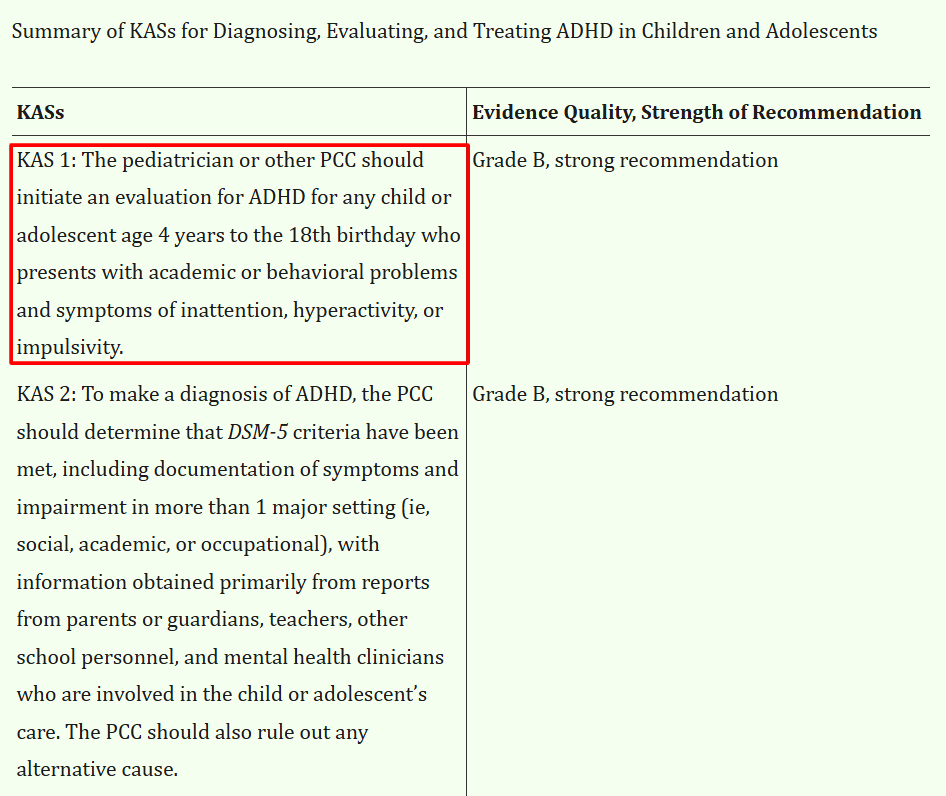
The American Academy of Pediatrics’ clinical practice guideline for ADHD diagnosis and treatment recommends that clinicians evaluate children and adolescents ages 4 through 18 when they show academic or behavioral concerns along with symptoms of inattention, hyperactivity, or impulsivity.
Behavioral Assessments and Rating Scales
After initial screening, doctors often use standardized behavioral rating scales to gather structured feedback from parents and teachers. These tools measure attention span, impulsivity, activity levels, emotional regulation, and daily functioning across different environments.
Common tools include questionnaires that ask how frequently certain behaviors occur, such as difficulty completing tasks, interrupting conversations, losing school materials, avoiding mentally demanding activities, or struggling to follow instructions.
These assessments are not used alone to diagnose ADHD, but they provide essential supporting evidence when combined with clinical interviews, school feedback, developmental history, and medical review.
The diagnosis process often follows these general stages:
| Assessment Source | Type of Information Collected |
| Parents | Home behavior, emotional regulation, routines, sleep, and family concerns |
| Teachers | Classroom attention, peer interaction, academic performance, and task completion |
| Child interviews | Self-reported feelings, frustrations, and daily challenges |
| Clinical observation | Direct behavioral assessment during evaluation |
This multi-source approach reduces bias and increases diagnostic accuracy because ADHD symptoms must be understood across more than one environment.
Differentiating ADHD from Other Conditions
One of the most important parts of diagnosis is distinguishing ADHD from other conditions that share similar symptoms. Many children who struggle with attention or behavior may also have anxiety disorders, learning disabilities, sleep-related problems, depression, trauma-related stress, or sensory issues.
For example, a child experiencing chronic sleep deprivation may appear inattentive or hyperactive during the day. Similarly, anxiety can cause restlessness and difficulty focusing, which may resemble ADHD symptoms.
Clinicians carefully evaluate whether symptoms are consistent across environments or if they are linked to a specific situation, stressor, or health issue. This step is critical because misdiagnosis can lead to ineffective treatment strategies and may delay the right support.
NIMH also added that stress, sleep disorders, anxiety, depression, and other physical conditions can cause symptoms similar to ADHD, which is why a thorough evaluation is needed before diagnosis.
Role of Schools in ADHD Diagnosis
Schools play a significant role in identifying ADHD symptoms because children spend a large portion of their day in structured academic environments. Teachers are often the first to notice attention difficulties, incomplete assignments, trouble following directions, peer conflicts, or disruptive classroom behavior.
Educational evaluations may also be conducted to assess whether a child has learning disabilities or academic challenges that could explain school struggles. In many cases, school psychologists, teachers, and counselors collaborate with medical professionals to provide a more complete behavioral profile.
This collaboration helps ensure that diagnosis is not based on isolated observations. Instead, it reflects consistent behavior across different environments, including home, school, and social settings. The CDC’s ADHD diagnosis guidance also emphasizes gathering information from parents, teachers, and other adults who care for the child.
Medical Evaluation and Physical Health Screening
Although ADHD is not diagnosed through blood tests, brain scans, or one single exam, medical evaluations are still an important part of the process. Doctors may conduct hearing and vision checks to rule out sensory issues that could affect attention and classroom performance.
A full physical examination helps ensure that symptoms are not caused by underlying medical conditions or medication side effects. Sleep patterns are also reviewed because sleep deprivation can significantly affect concentration, mood, and behavior in children.
In some cases, doctors may recommend additional psychological or educational testing if learning disabilities, developmental concerns, or emotional disorders are suspected.
Diagnostic Timeline and Observation Period
ADHD diagnosis is rarely immediate. In many cases, clinicians observe the child over multiple visits or request extended feedback from parents and teachers over several weeks or months.
To understand how this process unfolds, here is a simplified timeline:
| Stage | Process |
| Initial consultation | Symptom discussion and medical history review |
| Screening phase | Behavioral questionnaires and teacher reports |
| Observation period | Monitoring behavior across settings |
| Clinical evaluation | DSM-5 criteria matching and final assessment |
| Diagnosis decision | Confirmation or exclusion of ADHD |
This gradual process supports accuracy and reduces the risk of premature labeling.
Importance of Early Diagnosis
Early identification of ADHD allows children to receive appropriate support strategies that can improve daily functioning at home, in school, and in social settings. Without diagnosis or support, children may struggle with self-esteem issues, frustration, repeated academic challenges, and conflict with adults or peers.
When ADHD is identified early, interventions such as behavioral therapy, parent training, classroom accommodations, and structured routines can help children build coping skills and reduce daily stress.
Treatment Planning After Diagnosis
Once ADHD is diagnosed, clinicians typically work with families to develop a personalized management plan. This may include behavioral therapy, parent training, school-based interventions, classroom accommodations, and in some cases, medication.
The treatment plan is not one-size-fits-all. It depends on symptom severity, age, academic challenges, emotional needs, coexisting conditions, and family preferences. Regular follow-ups are important to monitor progress and adjust strategies when necessary.
The CDC’s treatment recommendations for ADHD note that for children age 6 and older, treatment often includes medication and behavior therapy together, along with parent training and school supports when appropriate.
For children younger than 6, the CDC recommends behavior therapy first for young children with ADHD, especially parent training in behavior management, before medication is tried.

Living With ADHD: Long-Term Perspective
ADHD is often a long-term condition, but with proper diagnosis and structured support, children can lead successful and productive lives. Many individuals with ADHD develop strong creativity, problem-solving skills, energy, and deep focus in areas that interest them.
The goal of diagnosis is not to label a child. The goal is to understand the child’s needs, reduce unnecessary frustration, and provide practical tools that help them function more confidently at home, in school, and in relationships.
FAQs
ADHD is diagnosed through clinical evaluation using DSM-5 criteria, behavioral reports from parents and teachers, developmental history, and direct observation by healthcare professionals. There is no single medical test that confirms ADHD.
Yes. Conditions such as anxiety disorders, sleep problems, learning disabilities, depression, chronic stress, and sensory issues can produce similar symptoms. This is why doctors carefully rule out other explanations before confirming ADHD.
ADHD can be diagnosed in childhood, including the preschool years in some cases. However, symptoms must be developmentally inappropriate, persistent, and present in more than one setting. The AAP’s clinical practice guideline focuses on ADHD evaluation and treatment for children and adolescents ages 4 through 18.
Teachers provide important information about classroom attention, task completion, peer interaction, behavior, and academic performance. Their input helps clinicians understand whether symptoms appear outside the home.
No. Treatment depends on the child’s age, symptoms, family preferences, and clinical needs. Plans may include behavioral therapy, parent training, school supports, classroom accommodations, and sometimes medication.
Conclusion
ADHD diagnosis in children is a careful, multi-step process that involves behavioral observation, clinical evaluation, medical review, and collaboration between families, schools, and healthcare providers. It cannot be confirmed through a single test and requires a comprehensive understanding of the child’s behavior across environments.
Accurate diagnosis helps ensure that children receive the right support at the right time, improving their ability to manage schoolwork, emotions, routines, and relationships. Understanding the process also reduces stigma and allows families to approach ADHD with clarity, patience, and confidence.




