
 By Walker Evans

Helping a child with ADHD at home can feel overwhelming, especially when everyday routines turn into repeated reminders, homework battles, emotional outbursts, or bedtime struggles. Many parents want to help but are unsure which strategies will actually make daily life calmer and more manageable.
Many people associate ADHD with a child who simply cannot sit still or pay attention. In reality, Attention-Deficit/Hyperactivity Disorder is a complex neurodevelopmental condition that affects how the brain manages attention, organization, impulse control, and follow-through. The National Institute of Mental Health explains that ADHD symptoms can affect daily life, school, work, activities, and social relationships.
Children with ADHD often struggle with tasks that seem simple to others. Remembering instructions, completing homework, managing emotions, and staying organized can require significantly more effort. What appears to be laziness or defiance is often a genuine neurological challenge.
Researchers continue to study possible causes of ADHD, including genes, hormones and other molecules, brain structure and activity, and prenatal or early-life exposures. While every child’s experience is different, the right home strategies can help children feel more supported, capable, and calm.
Key Takeaways
- Children with ADHD benefit from structure, consistency, and predictable routines at home.
- Positive reinforcement is often more effective than repeated criticism because it helps children connect effort with progress.
- Short, manageable tasks can improve focus and reduce frustration.
- Physical activity can help support healthy development, attention, mood, and energy regulation.
- Emotional support is just as important as academic support.
- A calm home environment can significantly reduce ADHD-related challenges.
- Parents play a critical role in helping children develop lifelong coping skills.
Creating Predictable Daily Routines
One of the most powerful ways to help a child with ADHD is by creating a predictable routine. Children with ADHD often struggle with transitions and unexpected changes. Knowing what comes next helps reduce anxiety and improve cooperation throughout the day.
A structured routine does not need to be rigid. Instead, it should provide enough consistency to make daily activities feel predictable. Wake-up times, meals, homework sessions, playtime, and bedtime should occur at approximately the same time each day whenever possible.
Consistency reduces the mental effort required to make decisions throughout the day. When routines become habits, children can focus more energy on learning and emotional regulation rather than constantly adjusting to new expectations.
Sample Morning Routine for Children with ADHD
| Time | Activity | Goal |
| 7:00 AM | Wake up and get dressed | Establish consistency |
| 7:15 AM | Personal hygiene | Build independence |
| 7:30 AM | Breakfast | Maintain energy and focus |
| 7:50 AM | Prepare school items | Improve organization |
| 8:00 AM | Leave for school | Reduce morning stress |
A predictable morning routine often sets the tone for the entire day and can significantly reduce conflict before school. Some children also benefit from visual schedules, picture charts, or written checklists because these tools reduce the need for constant verbal reminders.
Making Homework Less Stressful
Homework can become one of the biggest daily battles for families dealing with ADHD. Many children struggle to maintain focus for extended periods, leading to frustration for both parents and children.
Instead of expecting long study sessions, breaking work into smaller segments often produces better results. Twenty minutes of focused effort followed by a short break is usually more effective than an hour of continuous work.
Parents can also help by minimizing distractions. Turning off televisions, reducing unnecessary noise, keeping phones or tablets away unless needed for schoolwork, and creating a dedicated study area can improve concentration. Some children benefit from visual timers that help them understand how much time remains for a task.
The goal is not perfection. The goal is steady progress and reducing the emotional burden associated with schoolwork.
An Example of a Homework Focus Schedule
| Study Period | Activity |
| 20 minutes | Focused homework |
| 5 minutes | Movement break |
| 20 minutes | Continue assignment |
| 5 minutes | Short break |
| 20 minutes | Review completed work |
This structure helps many children sustain attention without becoming overwhelmed. If 20 minutes is too long, start with 10 or 15 minutes and build gradually. A child who experiences success is more likely to cooperate the next time homework begins.
The Power of Positive Reinforcement
Children with ADHD often hear more corrections than compliments throughout the day. Constant criticism can gradually affect confidence and motivation.
Positive reinforcement focuses on recognizing effort and progress. Instead of waiting for perfect behavior, acknowledge small victories. Completing part of a homework assignment, following one instruction, getting ready on time, or managing emotions appropriately are all opportunities for encouragement.
For example, instead of saying, “You never finish your homework,” a parent might say, “I noticed you finished the first five problems before your break. That shows good effort.” This type of feedback helps the child understand exactly what behavior to repeat.
Rewards do not always need to be material. Extra playtime, choosing a family activity, earning a sticker, reading a favorite book together, or receiving specific praise can all reinforce positive behavior. The key is to recognize effort quickly and consistently.
Children are more likely to repeat behaviors that receive positive attention than behaviors that are constantly criticized. Over time, this can help a child feel more capable and less defensive.
Managing Emotional Outbursts at Home
ADHD affects more than attention. Many children with ADHD experience frustration intensely and may react quickly when they feel disappointed, rushed, embarrassed, or overwhelmed.
When a child is upset, responding with calmness is often more effective than immediate discipline. Emotional moments are rarely ideal opportunities for teaching long lessons. The first goal should be helping the child regain emotional control.
During an outburst, keep instructions short. A child who is overwhelmed may not be able to process a long explanation. Simple phrases such as “Let’s take a break,” “You are safe,” or “We can talk when your body feels calmer” are often more effective than reasoning in the moment.
Once the situation has settled, parents can discuss what happened and explore better ways to handle similar situations in the future. Ask what felt hard, what helped, and what the child could try next time. This approach teaches emotional skills rather than simply punishing mistakes.
Children who feel understood are often more willing to cooperate and learn from challenging experiences.
Encouraging Physical Activity Every Day
Physical activity is one of the most underrated tools for helping children manage energy, stress, and attention. Exercise gives children a healthy outlet for movement and can support overall well-being.
Children do not need intense athletic training to benefit. Walking, cycling, swimming, playing outdoors, dancing, martial arts, playground time, or participating in team sports can all contribute positively.
The World Health Organization notes that physical activity supports bone, muscle, motor, and cognitive development in children and adolescents. Many parents notice improved focus and calmer behavior after periods of active play.
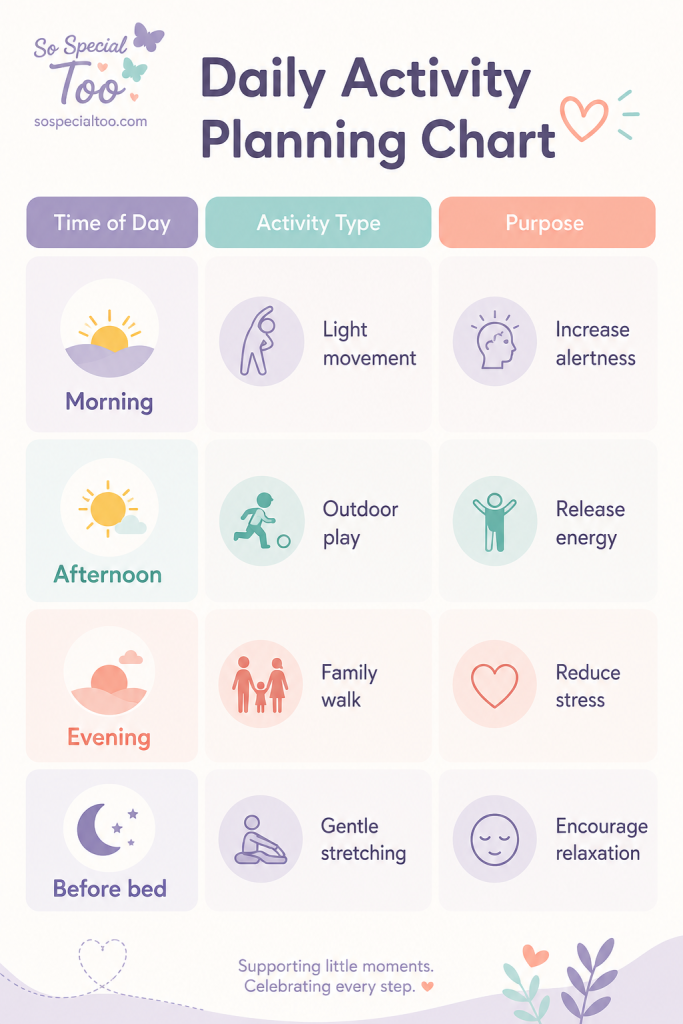
Regular movement can become an important part of an ADHD management plan. When possible, physical activity should be built into the daily routine rather than treated only as a reward that can be removed.
Building Strong Communication Habits
Children with ADHD often receive frequent reminders and corrections. Over time, they may become less responsive simply because they hear so many instructions throughout the day.
Clear and concise communication tends to work best. Instead of providing multiple instructions at once, give one direction and allow time for processing. For example, “Put your shoes by the door” is easier to follow than “Clean up your room, pack your bag, find your shoes, and hurry up.”
Maintaining eye contact and confirming understanding can also improve follow-through. Children with ADHD may genuinely forget instructions within seconds if too much information is presented at once.
Effective communication is less about talking more and more and more about making instructions easier to understand and remember. Parents can also use written reminders, visual checklists, or routine charts to reduce the need for repeated verbal prompting.
Reducing Distractions Inside the Home
The modern home contains countless distractions. Televisions, tablets, smartphones, gaming systems, toys, and background noise can make it even more difficult for children with ADHD to concentrate.
Creating designated spaces for studying, reading, and relaxing can help separate activities and improve focus. Organized environments also reduce the mental effort required to locate school supplies, toys, or personal items.
A perfectly organized house is not necessary. Even small improvements in reducing clutter and distractions can create meaningful benefits. A homework basket with pencils, paper, chargers, and folders can help a child stay focused while searching for materials.
Parents can also reduce distraction by making expectations visible. A short checklist near the study area may work better than repeated reminders from across the room.
Supporting Healthy Sleep Habits
Sleep problems are common among children with ADHD. Poor sleep can worsen attention difficulties, impulsive behavior, emotional regulation, and academic performance.
A consistent bedtime routine can help the brain recognize when it is time to rest. Limiting screen exposure before bed, keeping bedtime predictable, and creating a calm evening routine are simple but effective strategies.
The CDC explains that students who get enough sleep are better supported in focus, concentration, and academic performance. For many children, better sleep does not remove every ADHD-related challenge, but it can make daily routines, emotions, and learning easier to manage.
Adequate sleep supports cognitive functioning, emotional stability, and overall health. Many ADHD symptoms become more manageable when sleep quality improves.

Helping Your Child Build Confidence
Children with ADHD often experience repeated setbacks. They may struggle academically, forget responsibilities, interrupt others, lose belongings, or receive negative feedback from peers and adults.
Building confidence requires creating opportunities for success. Encourage activities that help the child develop strengths and experience achievement. Whether it involves art, music, sports, technology, animals, building projects, cooking, or another interest, success in one area often improves self-esteem across other areas of life.
Confidence is not built through constant praise alone. It develops when children experience genuine accomplishment and learn that challenges can be overcome with effort and support.
Parents can help by noticing progress instead of only pointing out mistakes. A child who feels capable is more likely to keep trying, even when tasks are difficult.
When Professional Support May Be Needed
Home strategies can be extremely effective, but some children may also benefit from professional intervention. Behavioral therapy, educational accommodations, counseling, and medical treatment can all play important roles depending on the child’s specific needs.
The CDC’s ADHD treatment guidance explains that parent training in behavior management, behavior therapy, school supports, and medication may be part of treatment depending on the child’s age and needs.
Seeking professional help is not a sign of failure. It is often an important step toward providing the best possible support. If ADHD symptoms are affecting your child’s school performance, relationships, self-esteem, or daily routines, a pediatrician, licensed therapist, psychologist, or ADHD specialist can help guide the next step.
FAQs
Create a quiet workspace, remove unnecessary distractions, and break tasks into smaller steps. Many children with ADHD focus better when they work in short blocks with movement breaks in between. Visual timers, checklists, and simple one-step instructions can also help.
ADHD symptoms may change over time, but many people continue to experience ADHD into adolescence and adulthood. Some children become better at managing symptoms as they develop coping skills, but ongoing support may still be needed at home, in school, or later in daily adult life.
Punishment alone is often ineffective because it does not teach the skills a child with ADHD needs. Clear expectations, consistent consequences, and positive reinforcement generally work better. The goal is to help the child learn to manage their behavior, not to make them feel ashamed of struggling.
Yes. Regular physical activity can help children release energy, reduce stress, and support healthy development. Activities like outdoor play, swimming, biking, walking, dancing, and sports can all be helpful when they are built into the child’s routine.
Consider professional help if symptoms significantly affect school performance, friendships, family life, emotional well-being, or daily functioning. A healthcare professional can evaluate your child’s needs and recommend behavioral therapy, school supports, counseling, medication, or a combination of approaches.
Conclusion
Helping a child with ADHD at home requires patience, consistency, and understanding. While there is no single solution that works for every child, creating predictable routines, encouraging positive behavior, reducing distractions, supporting emotional regulation, promoting physical activity, and protecting sleep can make a meaningful difference.
Progress is rarely immediate. Some days will be easier than others. However, small improvements accumulate over time. Most importantly, children with ADHD need to know that they are not lazy, bad, or broken. With the right support, they can build confidence, develop coping skills, and succeed at home, in school, and in everyday life.




