
 By Walker Evans

Caring for an autistic child can be deeply meaningful, but it can also stretch your emotional, physical, and mental energy in ways other people may not fully understand. Between appointments, school communication, sensory needs, therapy decisions, sleep struggles, family responsibilities, and everyday parenting, your own well-being can easily slip to the bottom of the list.
Self-care for autism parents is not about spa days, perfect routines, or pretending the hard parts are easy. It is about protecting your health, asking for support, and building small moments of recovery into real family life.
The goal is not to add one more task to your already full day. The goal is to make caregiving more sustainable before exhaustion becomes your normal state.
Quick Answer
Self-care for autism parents means protecting your health while caring for your child’s daily needs. It includes noticing stress early, taking short breaks, asking for help, staying connected to supportive people, setting boundaries, and protecting basic needs like sleep, movement, food, and emotional support.
Self-care does not have to be complicated. A five-minute breathing break, a short walk, an honest text to someone who understands, or a planned hour of respite can all help. What matters most is consistency, not perfection.
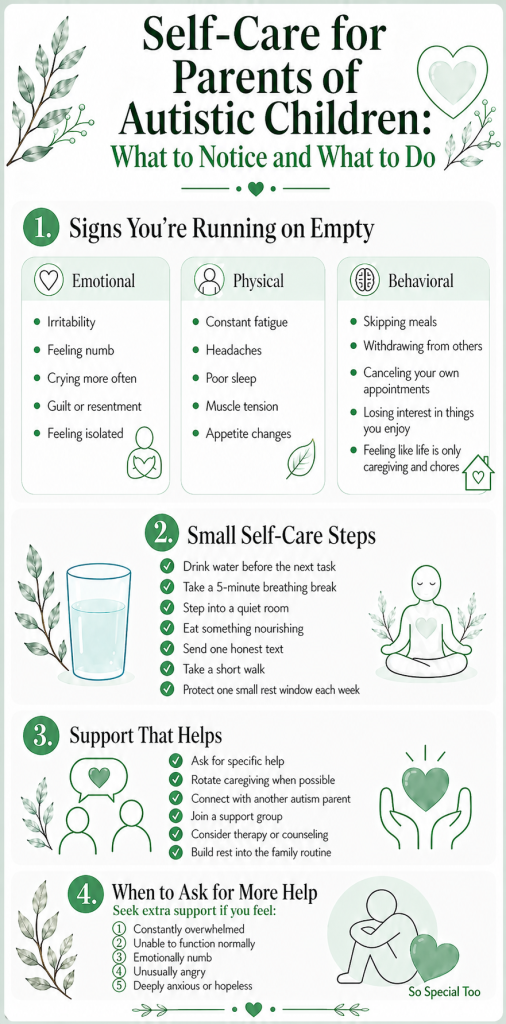
Here is a quick visual guide to the signs of stress, small self-care steps, and support options parents can use before burnout builds.
Why Autism Parents Need Support Before Burnout
Many parents wait until they are completely exhausted before they give themselves permission to rest. But self-care works best when it becomes part of the routine before burnout takes over.
Autism parenting often includes a high level of coordination and emotional labor. You may be tracking behaviors, preparing for transitions, advocating at school, managing sensory overload, supporting communication, and trying to keep daily life predictable. The World Health Organization notes that autism support needs vary widely and that the demands on families providing care and support can be significant.
Self-Care Helps You Stay Regulated
Children often look to their caregivers for emotional cues. When you are constantly tense, sleep-deprived, or overwhelmed, it becomes harder to respond calmly during meltdowns, transitions, or difficult moments.
Taking care of yourself does not make challenges disappear, but it can give you more room between a stressful moment and your reaction. That space matters. It can help you pause, breathe, choose your words, and respond in a way that supports both your child and yourself.
Self-Care Reduces the “Always On” Feeling
Many autism parents feel like they can never fully relax. Even when the house is quiet, your mind may still be planning tomorrow’s schedule, replaying a hard interaction, or worrying about your child’s future.
Self-care gives your nervous system chances to come out of emergency mode. That might mean scheduling a quiet break, asking someone else to handle a task, using a calming routine before bed, or talking with someone who understands the emotional weight of caregiving.
Signs You May Be Running on Empty
Burnout does not always arrive suddenly. Sometimes it builds quietly until everyday tasks feel impossible.
The American Psychological Association notes that caregivers may experience stress, guilt, sadness, fatigue, sleep problems, anxiety, depression, and other health-related concerns. Paying attention to these signs early can help you respond before exhaustion becomes your normal state.
Emotional Signs of Stress
You may notice that you are more irritable than usual, crying more often, feeling numb, or losing patience over small things. You might feel resentful and then guilty for feeling resentful. You may also feel isolated, even when you are surrounded by people.
These emotions do not mean you are a bad parent. They are signals that your emotional load is too heavy to carry without more support.
Physical Signs of Burnout
Stress often shows up in the body before we name it. Headaches, stomach problems, muscle tension, frequent illness, appetite changes, and ongoing fatigue can all be signs that your body needs care.
Sleep can be especially difficult for parents whose children have irregular sleep patterns. Still, even small improvements matter. A consistent wind-down routine, reduced late-night scrolling, or taking turns with another caregiver when possible can help protect your rest.
Behavioral Signs You Need Support
You may be withdrawing from friends, skipping meals, canceling appointments for yourself, or giving up activities that once brought you joy. You might feel like there is no time for anything beyond caregiving and chores.
When life becomes only responsibility and recovery, it is time to rebuild support around you.
Small Ways to Make Caregiving More Sustainable
Self-care works best when it matches your actual life, not an ideal version of your life. Parents do not need unrealistic advice. They need small, repeatable habits that can survive busy mornings, therapy schedules, school meetings, and unpredictable days.
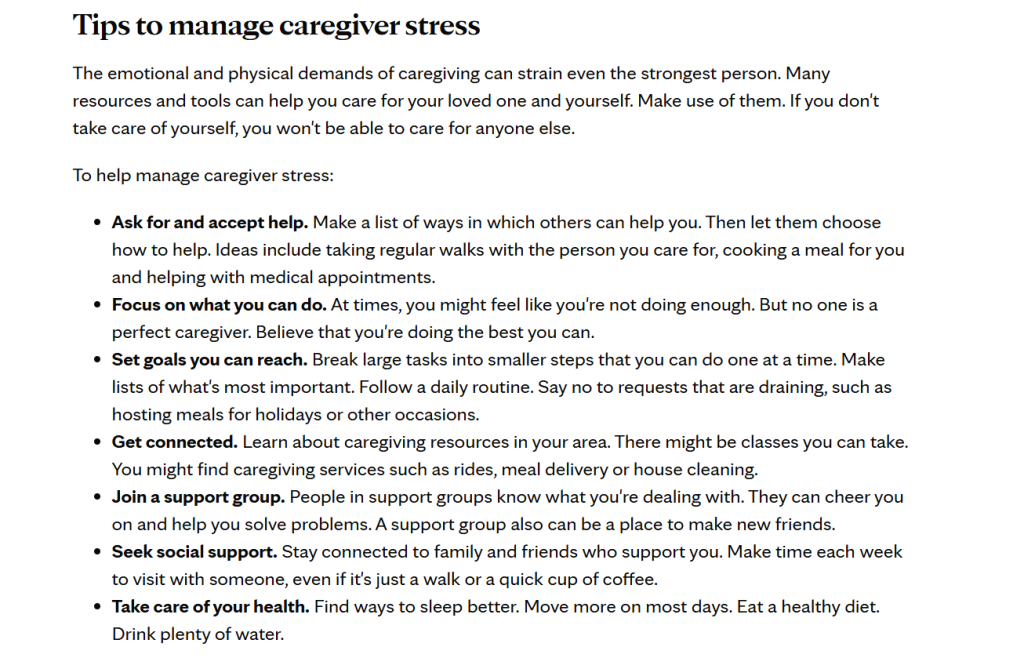
The Mayo Clinic recommends caregiver stress strategies such as joining a support group, staying connected to supportive family and friends, moving more, improving sleep, eating well, and staying hydrated.
Good enough self-care still counts. Some days, self-care may be a therapy session, a workout, or a quiet evening. Other days, it may be eating something nourishing while standing in the kitchen, drinking water before the next task, or sitting quietly for five minutes. The point is not to create another standard you feel guilty about missing. The point is to keep returning to your needs in realistic ways.
Start With Five-Minute Resets
A five-minute reset can help interrupt stress before it takes over your entire day. You do not need a quiet house or a perfect routine. You only need a small pause.
| When You Feel… | Try This Five-Minute Reset |
| Overstimulated | Step into a quieter room, dim the lights, and take slow breaths |
| Angry or tense | Put both feet on the floor and unclench your jaw and shoulders |
| Mentally overloaded | Write down the next three tasks only, not the whole day |
| Lonely | Send one honest text to someone safe |
| Exhausted | Sit down, drink water, and pause before starting the next task |
The power of these resets is that they are small enough to repeat. Over time, small pauses teach your body that it does not have to stay in survival mode all day.
Protect Basic Health Habits
When caregiving gets intense, basic needs are often the first things to go. You may skip meals, push through fatigue, or ignore your own appointments because your child’s needs feel more urgent.
Try starting with one basic habit instead of changing everything at once. Keep a water bottle nearby. Prepare simple snacks you can eat quickly. Take a short walk while your child is at therapy or school. Schedule your own medical checkups with the same seriousness you bring to your child’s appointments.
You matter in the family system, too.
The Kind of Support That Actually Helps
Many parents are told to “ask for help,” but that advice can feel frustrating when people do not understand autism, sensory needs, communication differences, or your child’s routines.
A useful support system is specific. Instead of hoping someone will know what to do, make it easier for them to help in ways that actually reduce your stress.
Ask for Specific Help
General offers like “Let me know if you need anything” often lead nowhere. Specific requests work better.
You might ask someone to pick up groceries, sit with your child while you shower, drive a sibling to practice, help with laundry, or come over during a difficult transition time. People who care about you may want to help but need clear direction.
Connect With Other Autism Parents
There is a special relief in talking to someone who understands without needing a long explanation. Other autism parents may understand the appointment fatigue, the sensory planning, the school advocacy, and the emotional mix of love, worry, pride, and exhaustion.
Support groups, online communities, local parent networks, and school-based groups can all help reduce isolation. So Special Too’s support services and resources also point families toward autism-related support topics that may help parents feel less alone.
Consider Professional Support for Yourself
Therapy, counseling, parent coaching, or a caregiver support group can provide a space to process your emotions without judgment. You do not need to wait until you are in crisis.
Professional support can be especially helpful if you are experiencing ongoing anxiety, depression, relationship strain, grief, or resentment. Getting help is not a sign that you are failing. It is a sign that you are taking the demands of caregiving seriously.
Why Boundaries Matter in Daily Caregiving

Boundaries can feel uncomfortable, especially when your child has real needs and you are used to being the person who handles everything. But boundaries are not about caring less. They are about making care sustainable.
A boundary may be as simple as saying, “I need ten quiet minutes before we talk about this,” or “I cannot take on another commitment this week.”
Make Rest Part of the Family Routine
Rest is easier to protect when it is built into the schedule. You might create a quiet time after school, rotate caregiving duties with a partner or relative, or plan a predictable weekly break.
If your child benefits from visual schedules, you may even include parent quiet time as part of the family rhythm. This helps normalize the idea that everyone in the home has needs.
Let Go of the Perfect Parent Standard
Many autism parents feel pressure to always be patient, informed, available, calm, and prepared. No human being can meet that standard every day.
Your child does not need a perfect parent. Your child needs a supported parent who has enough room to recover, repair, and keep going. When mistakes happen, repair matters more than perfection. A calm apology, a reset, and a better plan for next time can be part of healthy family life.
Planning Ahead for the Hardest Days
A self-care plan is most helpful when it is created before the hardest moments happen. When you are already overwhelmed, it can be difficult to think clearly or decide what you need.
Keep the plan simple and visible. You might write it in your phone, place it on the fridge, or share it with a partner or trusted support person.
Include Three Levels of Support
Think of your plan in three levels: daily care, early stress signs, and crisis support.
Daily care includes the small habits that help you stay steady, such as water, food, movement, short breaks, connection, and sleep routines. Early stress support includes what you will do when you notice irritability, exhaustion, or overwhelm building. Crisis support includes who you will call, what responsibilities can be paused, and where you can get professional help if your mental health feels unsafe.
Know When to Seek Immediate Help
If stress turns into thoughts of harming yourself or someone else, or if you feel unable to stay safe, seek immediate emergency or crisis support in your area. Those thoughts are not something to push through alone.
Self-care includes knowing when the situation is bigger than a bath, a walk, or a deep breath. Sometimes the bravest step is getting urgent help.
FAQs
Self-care brings up a lot of questions for autism parents, especially when time, guilt, and family responsibilities are already heavy. These answers are meant to be practical and realistic.
Start with short, repeatable habits. Drink water before coffee, take three slow breaths before responding to stress, step outside for two minutes, stretch while waiting for your child, or send a quick message to a supportive friend. Self-care does not have to be long to be useful.
No. Taking time to rest helps you return with more patience and energy. Your child’s needs matter, and your needs matter too. A healthier parent is better able to provide steady, compassionate care.
Common signs include constant fatigue, irritability, sadness, anxiety, sleep changes, loss of interest in things you used to enjoy, feeling detached, and struggling with tasks that once felt manageable. Physical symptoms like headaches, stomach issues, and muscle tension can also appear.
Try giving specific examples instead of broad explanations. For example, say, “I need help during bedtime because that is when meltdowns are most likely,” or “Could you handle dinner on therapy days?” If they still do not understand, look for support from autism parent groups, professionals, or community resources.
Self-care may not remove the challenges, but it can make them more manageable. When you are rested, supported, and emotionally regulated, it is easier to problem-solve, advocate, and respond calmly during difficult moments.
Conclusion
Self-care for autism parents is not a luxury or a reward you earn after everything else is done. It is part of what keeps your family functioning.
When you protect your health, ask for support, set boundaries, and notice stress before it becomes burnout, you create more stability for yourself and your child. Start with one small change that feels possible this week. Your well-being matters, not only because you are a parent, but because you are a person deserving of care too.




