 By Walker Evans
Deciphering your child’s early years is like reading a complex and constantly changing map. Each milestone is like a landmark, and every detour raises questions about their development.
The journey becomes particularly nuanced when distinguishing between speech delays and Autism Spectrum Disorder (ASD)—two paths intertwined yet distinctly marked.
This guide illuminates the subtle contours and signs differentiating the two, offering a beacon for parents trekking through the developmental landscape.
Equipped with expert insights, practical strategies, and a compassionate perspective, we’re here to demystify these conditions, empowering you to support your child’s journey with confidence and clarity.
Explore the critical signs, actions, and achievements that help you understand and support your child’s development.
We’ll guide you through the most crucial steps so you can better nurture your child’s growth.
Key Differences Between Speech Delay vs Autism
Distinguishing between speech delay and Autism Spectrum Disorder (ASD) in early childhood is crucial for understanding a child’s development and guiding appropriate interventions. There are some distinct differences when you compare these with global development delay vs autism.
While both can affect a child’s communication skills, they are fundamentally different conditions with distinct developmental and behavioral markers.
Let’s delve into these primary differences, bolstered by expert insights, to provide clarity and direction for parents and caregivers.
Developmental Markers
Speech Delay: Primarily characterized by a delay in developing language skills, children with speech delay may struggle with expressing themselves or understanding spoken language. However, their social interaction skills, such as making eye contact, showing interest in others, and engaging in non-verbal communication, typically align with developmental expectations for their age.
Autism Spectrum Disorder: ASD impacts a broader spectrum of developmental areas beyond speech and language. Children with autism may exhibit delayed speech but face challenges in social communication and interaction. This includes difficulty with eye contact, limited shared interests, challenges understanding social cues, and a preference for solitary play. Additionally, children with ASD often display repetitive behaviors and have a strong adherence to routines.
Behavioral Markers
Speech Delay: The critical behavioral marker of speech delay is the child’s struggle with verbal communication without necessarily showing difficulties in the social aspects of communication. They might use gestures to communicate and show understanding of social cues, even if they can’t articulate their thoughts verbally.
Autism Spectrum Disorder: Behavioral markers for ASD include not only challenges with verbal communication but also distinct patterns of behavior, such as repetitive movements, intense interest in specific subjects, sensitivity to sensory inputs, and insistence on sameness. These behaviors are accompanied by notable difficulties in reciprocal social interaction, like sharing emotions or understanding others’ feelings.
Expert Insights
Dr. Hannah Jones, a developmental pediatrician, notes, “While speech delay might be one of the first concerns that bring a child to our attention, it’s the presence of social communication challenges and repetitive behaviors that lead us to consider an autism diagnosis. Understanding the child’s behavior across different contexts is essential for accurate diagnosis.”
Dr. Laura Kim, a speech-language pathologist, adds, “Children with speech delay often show a keen interest in social interaction and can engage with others using non-verbal means. In contrast, children with ASD may find these social exchanges more challenging, regardless of their language abilities.”
Developmental Markers and Diagnostic Criteria
When it comes to understanding and diagnosing speech delay and Autism Spectrum Disorder (ASD), professionals rely on a set of developmental markers and diagnostic criteria.
These benchmarks and guidelines help differentiate between the two conditions, guiding the direction of subsequent interventions.
This section explores the key markers and criteria used in diagnosis, underscoring the importance of comprehensive evaluations in accurately identifying ASD.
Developmental Markers for Speech Delay and Autism
Speech Delay
- Language Skills: Significant delays in language skills, such as babbling, first words, and two-word phrases, are primary markers. Children with speech delay might have a limited vocabulary for their age or struggle with pronunciation.
- Communication Efforts: Despite delays in verbal language, children with speech delays often attempt to communicate through gestures, facial expressions, or alternative non-verbal means.
Autism Spectrum Disorder
- Social Communication and Interaction: Challenges in social communication are hallmark signs of ASD. This includes difficulty with back-and-forth conversation, reduced sharing of interests or emotions, and struggles with maintaining eye contact or understanding non-verbal cues.
- Repetitive Behaviors and Interests: Engaging in repetitive behaviors, having a stringent adherence to routines, or showing highly fixated interests are significant markers. Sensitivity to sensory inputs (e.g., sounds, textures) also falls under this category.
Diagnostic Criteria for ASD
The diagnosis of ASD is based on criteria outlined in the Diagnostic and Statistical Manual of Mental Disorders (DSM-5), which includes:
- Persistent deficits in social communication and social interaction across multiple contexts.
- Restricted, repetitive patterns of behavior, interests, or activities.
- Symptoms must be present in the early developmental period.
- These disturbances cause clinically significant impairment in social, occupational, or other important areas of current functioning.
It’s important to note that ASD is identified as a spectrum, acknowledging a wide range of manifestations and severities of these symptoms.
The Role of Comprehensive Evaluations
Diagnosing ASD involves more than just observing a child’s behavior—it requires a comprehensive evaluation that often includes:
- Developmental Interviews and Questionnaires: Gathering detailed developmental history from parents or caregivers.
- Behavioral Observations: Professionals observe the child in various settings to understand their social interactions, communication skills, and behaviors.
- Standardized Diagnostic Tools: Instruments like the Autism Diagnostic Observation Schedule (ADOS) or the Autism Diagnostic Interview-Revised (ADI-R) are often used to assess ASD symptoms systematically.
Expert Insight
Dr. Evelyn White, a clinical psychologist specializing in childhood disorders, emphasizes, “A comprehensive evaluation is crucial for accurately diagnosing ASD. It allows us to see the full picture of a child’s development and how their behaviors align with the diagnostic criteria.
This holistic approach ensures we can provide tailored recommendations for each child’s unique needs.”
The Importance of Early Intervention
Early intervention is a cornerstone principle in the field of child development, particularly for children with speech delays or Autism Spectrum Disorder (ASD). It embodies the proactive steps taken during a child’s early years—typically regarded as the period from birth to three years old—to address and support developmental concerns. This section explores how early intervention can be a transformative force in the lives of children facing these challenges and provides an overview of the strategies and therapies employed.
Transformative Benefits of Early Intervention
Enhancing Developmental Trajectories
Early intervention services can significantly alter a child’s developmental path. By addressing delays or atypical behaviors early, these programs help children acquire essential skills more effectively, improving their long-term outcomes in learning, socialization, and independence.
Building a Foundation for Learning
Early intervention focuses on enhancing language acquisition for children with speech delays, improving both expressive and receptive language skills. This foundation is crucial for effective communication, academic success, and social interaction throughout their lives.
Supporting Social and Emotional Development
In the case of ASD, early intervention goes beyond speech and language, addressing the broader spectrum of challenges associated with the disorder. This includes fostering social skills, reducing problematic behaviors, and supporting emotional regulation, thereby enhancing the child’s ability to engage with the world around them.
Empowering Families
Early intervention also plays a vital role in supporting and educating families. By providing resources, training, and strategies, these programs empower parents and caregivers to participate actively in their child’s development, ensuring that progress continues across all environments.
Intervention Strategies and Therapies
For Speech Delays
- Speech and Language Therapy: Tailored sessions with a speech-language pathologist focus on stimulating language development, improving articulation, and enhancing comprehension skills.
- Parent-Implemented Intervention: Training parents on techniques to encourage speech and language development at home, including reading, singing, and engaging in interactive play.
For Autism Spectrum Disorder
- Applied Behavior Analysis (ABA): A widely recognized approach that uses positive reinforcement to teach various skills and reduce undesired behaviors.
- Developmental, Individual Differences, Relationship-Based Approach (DIR/Floortime): This method emphasizes emotional and relational development through play and interactions that follow the child’s lead.
- Occupational Therapy: Focuses on improving sensory integration, fine motor skills, and daily living skills, enhancing the child’s ability to navigate their environment.
- Social Skills Training: Group or individual sessions to build social competencies, including understanding social cues, turn-taking, and forming friendships.
How to Support Your Child’s Development
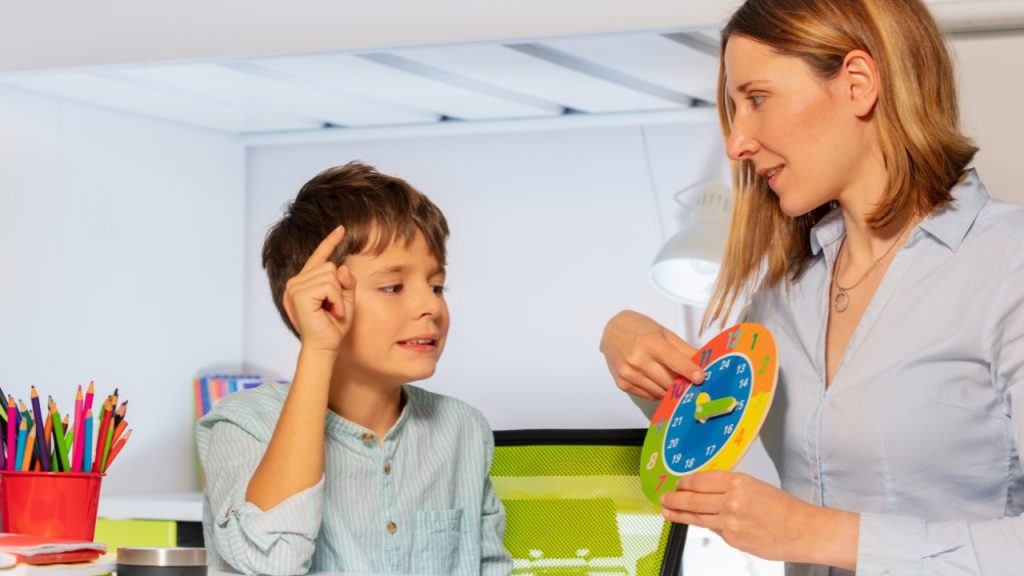
Supporting your child’s development, especially in language and social skills, is a journey filled with opportunities for engagement and learning.
Whether your child is navigating the challenges of a speech delay, ASD, or simply on their unique developmental path, there are numerous ways you can bolster their growth.
Here, we explore practical tips and resources for enriching your child’s language acquisition and social development at home.
Enhancing Language Development
Create a Language-rich Environment
Surround your child with language through everyday activities. Narrate your actions throughout the day, describe objects and events, and engage in storytelling to expose them to a rich vocabulary.
Read Together: Incorporate books into your daily routine, choosing age-appropriate stories that capture your child’s interest. Discuss the pictures and ask questions to encourage interaction and comprehension.
Sing and Use Music
Songs and music are not only enjoyable but also instrumental in language development. Sing nursery rhymes, simple songs, and make-up tunes together to introduce new vocabulary in a fun and memorable way.
Encourage Expression
Prompt your child to express their needs and thoughts with words, even just simple phrases or gestures. Offer choices to encourage decision-making and verbal responses.
Fostering Social Development
Model Social Interactions
Demonstrate basic social skills by saying please, thank you and taking turns. Use dolls, stuffed animals, or action figures to role-play social scenarios that your child might encounter.
Playdates and Social Settings:
Arrange playdates with peers to allow your child to practice social skills in a safe and controlled environment. Start with short, structured playdates, gradually increasing their length and complexity as your child becomes more comfortable.
Teach Emotional Recognition
Use books, pictures, and real-life situations to teach your child about emotions and appropriate responses. Discussing characters’ feelings in stories or pointing out facial expressions can be particularly effective.
Resources and Tools
Language Development Apps
Apps like “Endless Alphabet” and “Speech Blubs” offer interactive ways for children to expand their vocabulary and practice pronunciation through engaging activities and games.
Social Stories
Social stories are short narratives that depict specific situations, highlighting appropriate social interactions and behaviors. Creating personalized social stories can help your child navigate social nuances and expectations.
Visual Schedules and Timers
Visual schedules outline the day’s activities with pictures, helping children understand routines and transitions. Timers can assist in managing time during activities or transitions, reducing anxiety and building independence.
When to Seek Professional Help
Understanding your child’s developmental journey can sometimes lead to questions and concerns about whether they are on the right path. Recognizing when it might be time to consult with healthcare providers or specialists is crucial to supporting your child’s growth.
Here, we outline guidelines to help parents identify when professional advice is needed and emphasize the importance of a supportive and non-judgmental approach toward developmental concerns.
Recognizing the Signs
Delayed Milestones: If your child is not meeting developmental milestones within the expected age range—babbling, making eye contact, smiling, sitting up, walking, or speaking—consider discussing these observations with a healthcare professional.
Changes in Behavior or Regression: Any sudden changes in behavior or loss of previously mastered skills can signal that your child may benefit from a professional evaluation.
Difficulties with Social Interaction: Challenges in social settings, such as difficulty making friends, limited eye contact, or not responding to their names by the age of one, can be reasons to seek further guidance.
Communication Challenges: If your child struggles with understanding simple instructions, expressing needs, or using gestures by a certain age, this could indicate a need for a professional assessment.
Sensory Sensitivities: Overly sensitive or under-responsive behaviors to sensory stimuli—like sounds, textures, or lights—warrant a conversation with a specialist.
Approaching the Conversation
Choose the Right Professional: Start with your pediatrician or family doctor, who can provide an initial assessment and direct you to the appropriate specialists, such as developmental pediatricians, speech-language pathologists, or psychologists, based on your child’s needs.
Be Prepared: Before the appointment, take notes on your observations, including specific behaviors, when they occur, and any patterns you’ve noticed. This information will be invaluable during the evaluation.
Ask Questions: Don’t hesitate to ask questions during the consultation. Inquire about the evaluation process, the findings, and the recommended next steps.
Seek Support: Recognize that navigating developmental concerns can be emotionally taxing. Seek support from partners, family members, or parent support groups to share experiences and coping strategies.
Emphasizing Support and Understanding
It is vital to approach your child’s development with a supportive and nonjudgmental mindset. Developmental challenges do not define your child; they are simply hurdles that can be overcome with the right support and interventions.
Remember, seeking professional help is a proactive step towards understanding your child’s unique needs and ensuring they receive the support necessary to thrive.
It’s also important to advocate for your child throughout this process. Feel free to seek a second opinion if you feel your concerns need to be adequately addressed or disagree with an assessment. Your intuition as a parent, combined with professional insights, will guide you in making informed decisions about your child’s care.