
 By Walker Evans

Watching a child learn to communicate is one of the most exciting parts of parenting. From soft coos and early babbling to first words and complete sentences, every stage reflects important brain development, social growth, and a child’s increasing ability to connect with the world around them.
While every child develops at their own pace, speech and language milestones give parents helpful benchmarks. These milestones are not meant to label a child or create unnecessary worry. Instead, they help families understand what is typically expected at different ages and when it may be time to ask for professional guidance.
It also helps to understand the difference between speech and language. Speech refers to the physical ability to produce sounds and words. Language involves understanding and using words to communicate ideas, needs, emotions, and questions. A child may understand many words but struggle to say them clearly, or they may speak words while still developing stronger comprehension.
Key Takeaways
Speech and language development looks different for every child, but milestones can help parents notice patterns and progress. Developmental milestones are useful checkpoints, and organizations such as the CDC and NIDCD note that they can help parents and health professionals recognize when a child may need extra support.
- Children develop communication skills at different rates.
- Missing one milestone does not always mean there is a serious concern.
- Missing multiple milestones or showing little progress over time may signal a speech or language delay.
- Speech development includes understanding language, not just saying words.
- Daily interaction, reading, singing, and play can support language growth.
- Early evaluation can provide reassurance and help children get support sooner when needed.
Why Speech Milestones Matter
Speech milestones are more than developmental checklists. They give parents insight into how a child is learning to listen, understand, respond, interact, and express needs. Communication is closely connected to learning, problem-solving, emotional development, and social relationships.
When children experience significant speech or language delays, they may have more difficulty with school readiness, early literacy, peer interaction, and confidence. Identifying concerns early allows families to access guidance, support, and therapy when appropriate.
ASHA explains that communication milestones are designed to help families know what to expect as a child grows and when to seek guidance from an audiologist or speech-language pathologist; ASHA also notes that these milestones are not a diagnostic tool.
Speech Milestones From Birth to 12 Months
During the first year of life, babies begin building the foundation for future communication. Even before they say words, infants are learning through listening, watching faces, responding to voices, and experimenting with sounds.
| Age | Typical Communication Milestones |
| 0–3 months | Coos, makes pleasure sounds, responds to familiar voices, quiets or smiles when spoken to |
| 4–6 months | Babbles, laughs, responds to sounds, turns toward voices, makes different vowel-like sounds |
| 7–9 months | Recognizes familiar words, responds to name, uses varied babbling patterns |
| 10–12 months | Understands simple words or routines, uses gestures, may say first meaningful words such as “mama” or “dada” |
By around 12 months, many children begin using meaningful words. However, language understanding often develops faster than spoken vocabulary at this stage. A baby may recognize names, routines, and common words before they can clearly say them.
Speech Milestones From 1 to 2 Years
The second year of life is often marked by rapid language growth. Toddlers begin connecting words to people, objects, actions, and familiar routines. They may also use gestures, pointing, facial expressions, and sounds to communicate before their spoken vocabulary fully catches up.
| Age | Typical Communication Milestones |
| 12–18 months | Uses several words, points to desired objects, responds to simple directions, imitates sounds or words |
| 18–24 months | Vocabulary grows, begins combining two words, follows familiar directions, names common objects |
Children at this age may say phrases such as “more juice,” “mommy come,” or “big truck.” Their understanding is often stronger than their ability to express themselves verbally, which is why frustration can sometimes appear during the toddler years.
Parents may also notice a vocabulary burst during this period. A child who uses only a few words one month may begin saying many more words soon afterward.
Speech Milestones From 2 to 5 Years
The preschool years bring major changes in communication. Children begin asking questions, using longer sentences, telling simple stories, following more complex directions, and participating in back-and-forth conversations.
| Age | Typical Communication Milestones |
| 2–3 years | Uses short sentences, follows two-step instructions, asks simple questions, uses word combinations often |
| 3–4 years | Speaks in longer sentences, tells simple stories, understands basic concepts, asks “who,” “what,” “where,” and “why” questions |
| 4–5 years | Holds conversations, uses more accurate grammar, tells stories with more detail, speech is mostly understandable |
By age five, most children can communicate effectively with family members, teachers, and peers. Some pronunciation errors may still happen, but speech should generally be understandable to familiar adults and often to unfamiliar listeners as well. ASHA’s communication milestones for ages four to five include using longer, more complex sentences, following simple directions and rules, and telling stories with connected ideas.
Factors That Influence Speech Development
Several factors can affect how quickly a child develops communication skills. Genetics, hearing ability, social interaction, home environment, overall health, and developmental differences can all play a role.
Children who are exposed to frequent conversation often have more opportunities to hear language, practice sounds, and learn new words. Reading books, singing songs, naming objects, and talking through daily routines can all support development in simple but meaningful ways.
Hearing is especially important. Since children learn language by listening, untreated hearing problems may delay speech and language growth. NIDCD notes that speech or language delays may sometimes be related to hearing loss and that a hearing test is often included when a child is evaluated for speech or language concerns.
Signs Your Child May Need Additional Evaluation
Not every late talker has a speech disorder. Some children need more time, and development can vary from child to child. Still, certain signs deserve attention, especially when they continue over time or appear alongside other concerns.
Parents may want to seek guidance if a child rarely babbles by 12 months, uses very few words by 18 months, does not combine words by age two, struggles to follow simple directions, or does not respond consistently to familiar sounds or voices.
It is also worth paying attention if a child loses words or communication skills they previously had. Regression should always be discussed with a pediatrician or qualified health professional.
Seeking help early does not mean something is definitely wrong. Often, an evaluation provides reassurance. When support is needed, earlier guidance can help children build communication skills during an important developmental period.
Common Causes of Speech Delays
Speech delays can happen for many reasons. Some children simply develop spoken language more slowly than their peers, while others may have underlying medical, developmental, or environmental factors affecting communication.
Hearing loss is one possible contributor. If a child cannot clearly hear speech sounds, they may have difficulty learning words, imitating sounds, or responding to language.
Other possible causes may include developmental language disorder, autism spectrum disorder, oral-motor difficulties, neurological conditions, or limited opportunities for interactive communication. In many cases, a professional evaluation is needed to understand what may be contributing to the delay.
How Parents Can Support Speech Development
Parents play a powerful role in speech and language development because communication grows through everyday interaction. Meals, bath time, playtime, errands, and bedtime routines all create natural opportunities for children to hear and use language.
Talking to children frequently helps them learn vocabulary, sentence structure, and conversational patterns. Reading aloud introduces new words and builds listening skills. Responding warmly to a child’s sounds, gestures, or words reinforces that communication has value.
Simple strategies can make a big difference:
- Describe what you and your child are doing.
- Read together every day, even for a few minutes.
- Sing songs and nursery rhymes.
- Give your child time to respond.
- Expand on what your child says. For example, if they say “dog,” you might say, “Yes, a big brown dog.”
- Ask simple questions that encourage more than a yes-or-no answer.
- Limit passive screen time and prioritize direct interaction.
ASHA also encourages families to talk, read, respond, support listening, and seek help early if they are concerned about communication development.
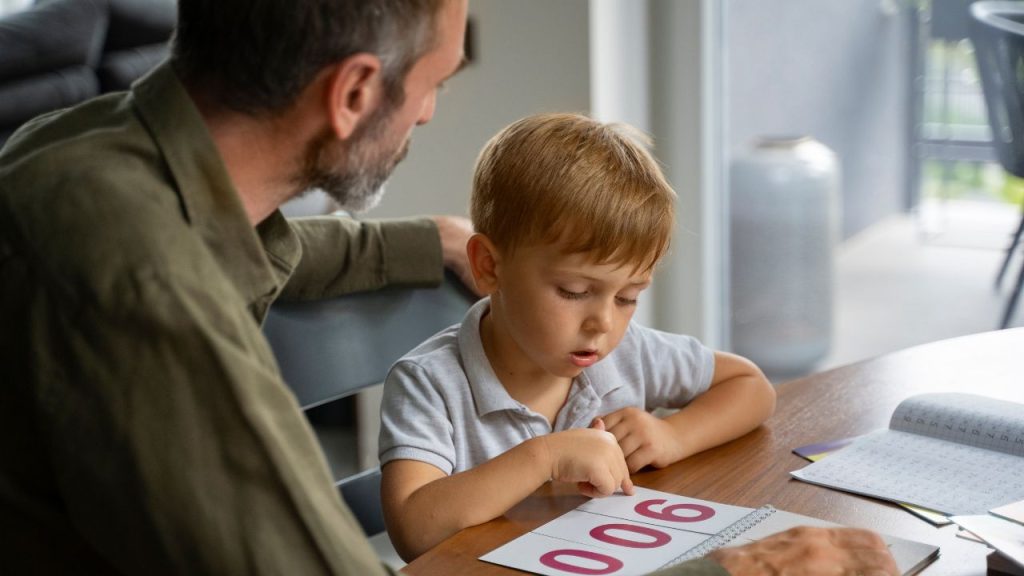
When to Seek Help From a Speech-Language Pathologist
Many parents wonder whether they should wait and see if their child catches up. While some children do progress naturally with time, professional evaluation can provide clarity and peace of mind.
Speech-language pathologists assess how a child understands and uses language, produces sounds, interacts socially, and communicates needs. They may also recommend hearing testing or additional developmental screening when appropriate.
If you are concerned about your child’s speech or language development, a pediatrician is a good first step. A pediatrician can discuss your concerns, check for possible medical factors, and refer you to a speech-language pathologist, audiologist, or early intervention program if needed.
The Importance of Early Intervention
Early intervention can make a meaningful difference for children with speech or language delays. The earlier challenges are identified, the more time children have to build foundational skills before school demands increase.
Young children’s brains are highly adaptable. Support during early childhood can help improve communication, confidence, learning readiness, and social interaction. Families also benefit from practical strategies they can use at home.
Instead of viewing evaluation as a sign of failure, parents can see it as a proactive step. Asking questions early helps ensure children receive the right support at the right time.
FAQs
Parents often have similar questions when tracking speech milestones. These answers can help clarify what is typical and when it may be helpful to speak with a professional.
Many children say their first meaningful words around 12 months of age, although some may begin a little earlier or later. Parents should also pay attention to whether the child responds to sounds, uses gestures, and seems to understand familiar words.
Some variation is normal, but a child with very few words by age two should be discussed with a pediatrician or speech-language pathologist. An evaluation can help determine whether the child is a late talker or needs additional support.
Too much passive screen time may reduce opportunities for back-and-forth interaction, which is important for language learning. Talking, reading, singing, and playing with caregivers are usually more valuable for communication development than passive viewing.
A speech delay affects how a child produces sounds and words. A language delay affects how a child understands words, uses words, combines ideas, or communicates meaning. Some children have one type of delay, while others may have both.
Parents should consider professional guidance if milestones are consistently missed, progress seems stalled, speech is difficult to understand for the child’s age, or there are concerns about hearing, comprehension, or social communication.
Conclusion
Speech milestones provide helpful guidance for understanding how children develop communication skills from infancy through the preschool years. While every child follows a unique developmental path, milestones help parents recognize expected progress and notice possible concerns early.
By monitoring language growth, encouraging daily communication, reading together, and seeking professional guidance when needed, families can support a child’s communication development in meaningful ways. Most importantly, parents should remember that help is available. Early action can give children the tools they need to communicate more clearly, connect with others, and build confidence for lifelong learning.




